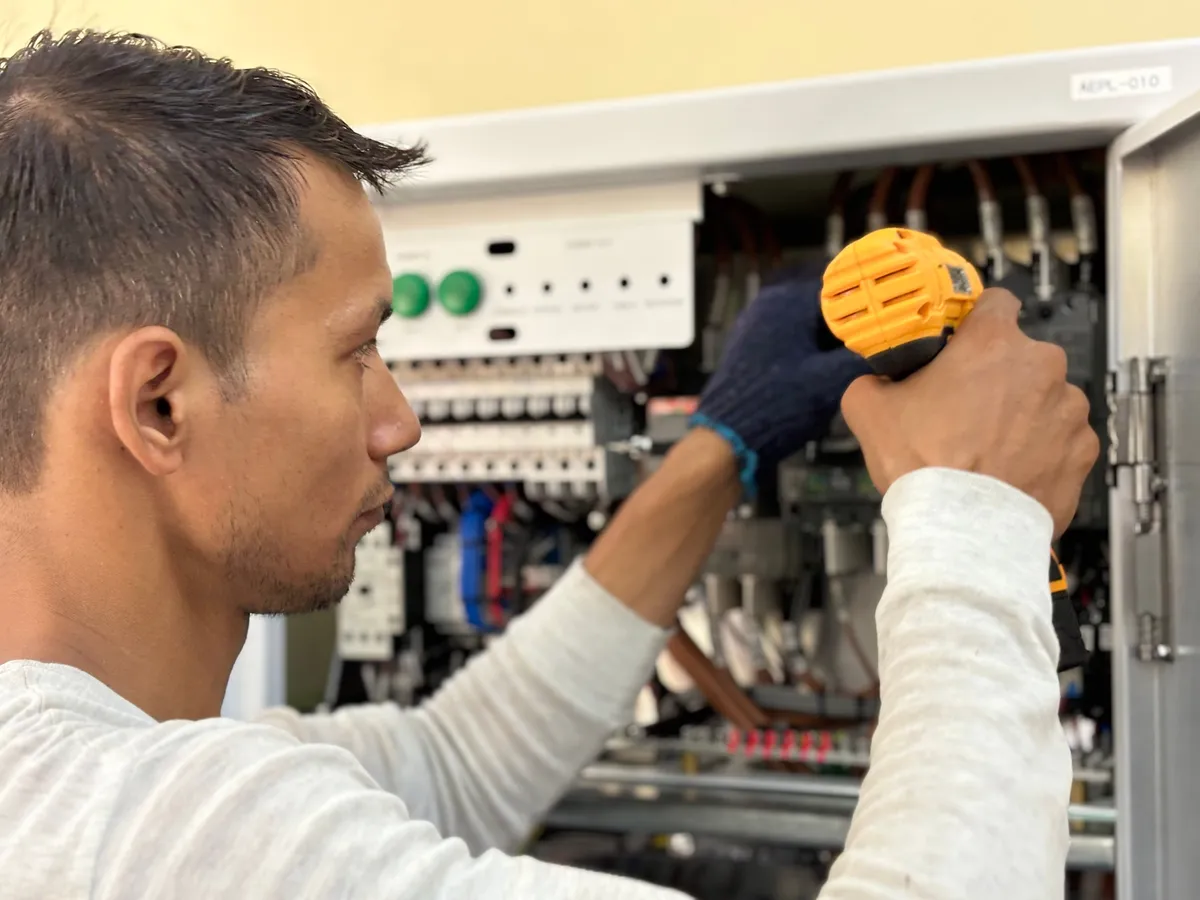
Nobody gets excited about permits. But if you own a home in Pahrump, the permit system is quietly one of the best consumer protections you have — it’s the only point in an electrical project where a neutral third party, who isn’t being paid by the contractor, looks at the work and says whether it’s right. This guide covers when a permit is required, how Nye County’s process works, what it costs you to skip one, and how the permit conversation doubles as the best contractor-vetting tool available.
We’re an independent referral service that connects homeowners with local licensed contractors — we don’t perform electrical work, and we don’t pull permits. What follows is homeowner education, with the county itself (Nye County Building & Safety, nyecountynv.gov) as the final word on current requirements and fees.
Which jobs need a permit
Nye County requires electrical permits for the significant stuff:
- Service upgrades and panel replacements — the classic Pahrump job, given the valley’s aging 1990s–2005 panel stock; see the panel upgrade service page for the full project walkthrough.
- New circuits — a spa circuit, a shop or garage subpanel feed, a dedicated freezer or RV outlet.
- EV charger circuits — a Level 2 charger is a new 40–60 amp, 240-volt circuit; details on the EV charger installation page.
- Generator installations — standby generators and transfer switches; see generator installation.
- Solar PV systems — panel interconnection is electrical work with its own review layer.
The rule of thumb that sorts nearly everything: adding or altering wiring needs a permit; like-for-like maintenance generally doesn’t. Swapping a broken outlet, replacing a light fixture, changing a switch — maintenance. Running anything new, upsizing anything, touching the service — permit. Gray areas exist (a bathroom remodel that “just” moves an outlet, for instance), and the cheap way to resolve them is a phone call to Building & Safety before the work, not an argument after.
How the process works
- Application. Permits are filed through the Nye County Citizen Services online portal or in person at the permit counter. For contracted work, the contractor files — that’s part of what you’re paying for, and their license information goes on the permit.
- The work, to rough-in. Wiring goes in but nothing gets closed up. This matters: work cannot be covered before inspection — no drywall over new wiring, no backfilling a trenched conduit run. A contractor who schedules drywall before the rough inspection has the sequence wrong, at your expense.
- Rough inspection. The county inspector checks the uncovered work — conductor sizing, breaker protection, grounding and bonding, box fill, GFCI/AFCI provisions where required.
- Finish and final inspection. Devices and covers on, panel labeled, system energized; the final inspection signs the job off.
- Keep the paperwork. The closed permit is a document with a long useful life: it answers buyer questions at resale, insurer questions at claim time, and appraiser questions at refinance. File it with your house records.
For service work, one extra Pahrump-specific coordination step rides alongside the permit: the disconnect and reconnect with Valley Electric Association, the valley’s member-owned utility co-op. Contractors who work Pahrump regularly handle the VEA scheduling as a matter of routine — and mentioning it unprompted is a good sign you’re talking to one.
What it costs — and what skipping it costs
Permit fees vary by job type and valuation; check current fee schedules through the Citizen Services portal or the permit counter. For a sense of scale on a common project: a typical EV charger circuit runs about $50–$200 for the permit and $100–$200 for the inspection — a small slice of a $1,200–$3,000 Level 2 install (2026 national ranges, HomeGuide cost datasets, reviewed July 2026; local quotes vary).
Now the other side of the ledger. Unpermitted electrical work costs nothing right up until one of these moments:
- Resale. Nevada’s disclosure process and any competent buyer’s inspector will surface obvious unpermitted work. Deals renegotiate or die over it, and retroactive permits typically mean opening finished walls so the inspector can see what’s in them.
- Insurance. A fire claim traced to unpermitted wiring invites scrutiny no homeowner wants, and some carriers ask about panel and system work directly at renewal.
- The work itself. The inspection exists because unreviewed electrical work fails in unreviewed ways. The inspector is the one person in the transaction with no financial interest in closing the wall up fast.
The permit conversation as a vetting tool
Here’s the practical magic of this topic: how a contractor talks about permits tells you almost everything you need to know about them. Nevada already gives you a hard vetting floor — electrical contracting requires an active Nevada State Contractors Board C-2 Electrical Contracting license, verifiable free in two minutes at nvcontractorsboard.com, and NRS 624.720 requires contractors to put that license number in their advertising. The permit conversation is the soft check that goes with it:
- “The permit and both inspections are in the bid — here’s the line item.” What you want to hear. Sequence, fee, and responsibility all named in writing.
- “We can save you some money by skipping the permit.” What that sentence actually means: the liability, the resale problem, and the uninspected work all become yours. It’s also a preview of every other corner that bid intends to cut.
- “You pull an owner’s permit and we’ll work under it.” For work a contractor performs, the contractor should be the one filing. A company asking you to hold the permit for their work is usually keeping their license number off the job — ask why, and ask Building & Safety how owner permits are actually supposed to be used before agreeing to anything.
More on choosing between actual local companies — including which ones volunteer the permit plan unprompted — in our best electricians in Pahrump guide.
Timelines, and the questions worth asking the county
Permit timing rarely decides a project, but it does shape scheduling: application review for routine residential electrical work is typically quick, inspections get scheduled as the work reaches each stage, and the whole permit layer usually adds days to a project’s calendar, not weeks — provided the contractor files promptly and the work passes the first time. A failed inspection is the real schedule risk: corrections plus a re-inspection visit. (It’s also, quietly, useful consumer information — an inspector catching something is the system working for you.)
If you call Nye County Building & Safety before a project, three questions get you almost everything you need:
- “Does this specific job need a permit?” Describe the actual work — it resolves the gray areas in one call.
- “What’s the current fee for this permit type?” Fee schedules change; the portal and counter have current numbers, and a quote’s permit line item should match them.
- “What inspections will this job get, and how are they scheduled?” Knowing the rough-in/final rhythm lets you sanity-check your contractor’s schedule — especially the rule that nothing gets covered before rough approval.
Save the answers with the written quotes. A contractor whose bid matches what the county told you independently is a contractor whose paperwork you can probably trust on everything else too.
Common Pahrump permit scenarios
- Panel upgrade: permit, VEA disconnect coordination, rough where applicable, final. Most 200A upgrades run $1,300–$2,500 installed; the panel upgrade cost guide itemizes it.
- EV charger: permit + inspection on a new 240V circuit. And a 2026 caution worth repeating: the federal 30C EV-charger tax credit expired June 30, 2026 — installs placed in service after that date don’t qualify, whatever an old blog post or an eager salesperson says. No VEA residential charger rebate was in effect as of our July 2026 review either; check vea.coop for anything current.
- Standby generator: electrical permit for the transfer switch and wiring; your contractor coordinates any other required reviews. See the generator installation cost guide for installed prices.
- Manufactured homes: permits apply just as fully, and the service-equipment details differ enough that you want a contractor who quotes manufactured-home work knowingly — a large share of the valley’s housing is manufactured, and our mobile home electrical page covers the differences.
The bottom line
The permit is the cheapest part of any electrical project and the only independent quality check in it. Insist on it, get it in the bid as a line item, keep the signed-off paperwork forever, and let every contractor’s attitude toward it tell you who they are.
If you’d like quotes from contractors who treat the process as routine, tell us about your project through our contact form and we’ll connect you with an independent Pahrump-area licensed contractor, free and with no obligation. Verify their NSCB license yourself before hiring — that habit, plus a written bid with the permit in it, is most of what “hiring well” means.
Last reviewed August 2026. Pahrump Electrician is a free, independent referral service — we connect Pahrump-area homeowners with a licensed local electrical contractor who calls you back and does the work. We're the connector, not the crew.